
-
Vietnam tours
VietNam Tour Packages
- South East Asia Tours
- Cruises
- Request a quote



Pha That Luang
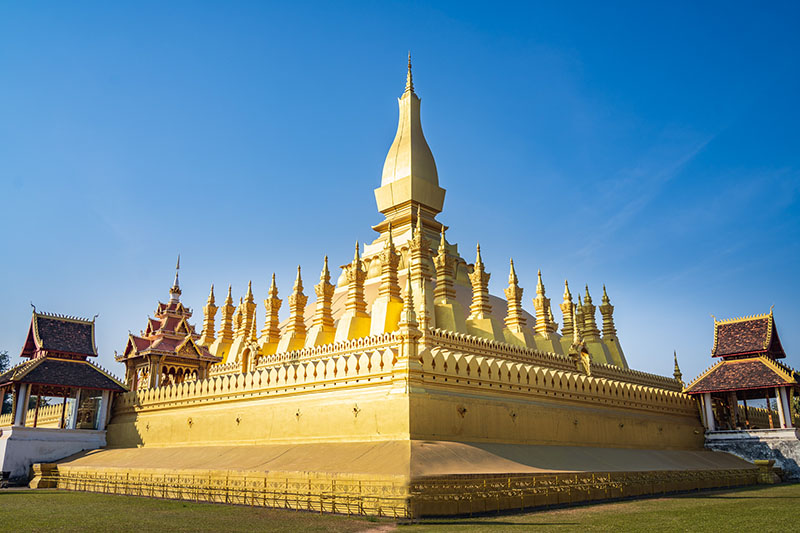
Pha That Luang (Lao: ທາດຫຼວງ or ພຣະທາດຫລວງ) another name Great Stupa is a magnificent gold-covered Buddhist Stupa in the centre of Vientiane City, Laos. It is generally regarded as the most important national symbol and sacred monument of Buddhism and Laos sovereignty.
| Location | Vientiane, Laos (approx. 4 km northeast of city center) |
| Opening Hours | Tuesday – Sunday: 8:00 AM – 12:00 PM | 1:00 PM – 4:00 PM (Closed Mondays) |
| Entrance Fee | 30,000 LAK (~$1.50 USD) for international visitors |
| Dress Code | Modest attire required (shoulders and knees covered) |
| Best Time to Visit | November (during That Luang Festival) or early morning |
HISTORY
Phat That Luang is believed to be built in the 3rd Century by the Indian Emperor Ashoka, it was originally built as a Hindu temple to house a breastbone of Lord Buddha. The structure was rebuilt in the 13th century as a Khmer temple, which later fell into ruin.
in 1566 the King Setthathirat relocated the Capital from Luang Prabang to Vientiane and renovated the stupa, transforming it into a grand Buddhist monument. It was heavily damaged by the Siamese invasion in 1928. The present structure is a French-directed reconstruction from the 1930s—made to replace an earlier botched French reconstruction of 1900—and is based on the detailed drawings from the late 1860s by the French architect and explorer Louis Delaporte.
ARCHITECHTURE
Pha That Luang's architecture is rich with symbolism and reflects Lao identity.
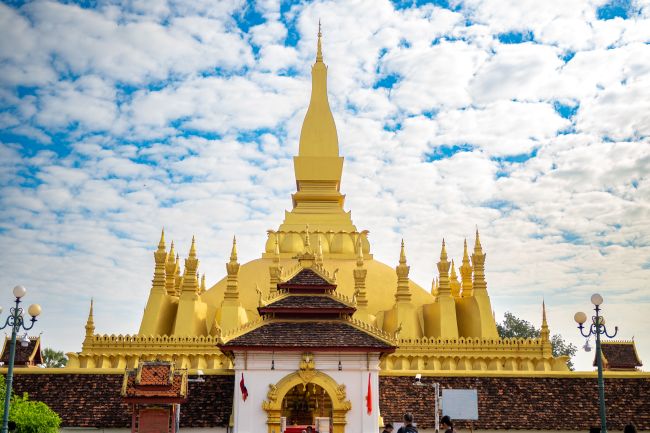
The stupa consists of three main levels, which are thought to represent the different stages of enlightenment in Buddhist doctrine, There are hundreds of sema stones on the first level, which represents the underworld. The second one includes thirty little surrounding stupas, each representing one of the thirty Buddhist perfections, also known as the realm of existence. The prelude to the Kingdom of Heaven or the spiritual realm is the final one. The first level measures about 68 by 69 meters, the second is 48 meters per side, and the third is 30 meters per side. The entire structure, from ground to pinnacle, is 45 meters (about 147 feet) high.
Only the pinnacle is covered with real gold and the rest is in golden colour.
HOW TO VISIT
Pha That Luang is divided into 2 parts, the exterior area and the interior of the stupa.
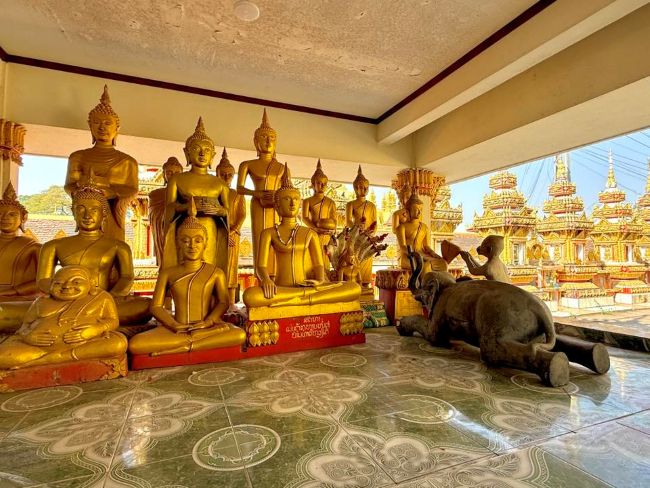
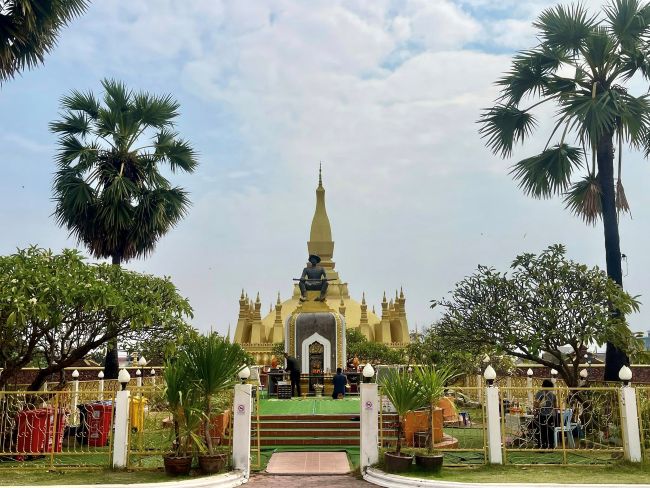
Pha That Luang's outer walls are surrounded by a covered walkway decorated with covered with beautiful carvings and statues. The area around the stupa is beautifully adorned with gardens, reflecting pools, and statues of mythical creatures and deities ( where the monks still live and study), adding grandeur and architectural beauty to the complex. The two most important sculptures the tourists should not miss are the Statue of King Sethathirath and Wat Neua That Luang the statue of King Sethathirath right in the middle of the Saysettha gardens on the way to the main entrance to the stupa. Meanwhile, Wat Neua That Luang is a small temple inside the complex built in the Thai architectural style.
Best time to visit: Best time to visit Pha That Luang is in the dry season from Nove to Feb, this is also the season of That Luang Festival, the festival is anually takes place during the full moon of the 12th lunar month in the Lao calendar, which is usually in November. It's held from three to seven days The festival starts with a colorful candlelight wax castle (Phasat Pheung) procession which starts the evening before at Vat Simeuang. The procession continues to the next afternoon from Vat Simeuang to Pha That Luang. People carry flowers, candles, incense and wax castles decorated with flowers and bank notes. People wear their best clothes for this procession and there is also a parade of the men and women dressed in various Loa ethnic costumes who dance and play traditional music and songs while approaching the stupa.
Opening hours: Daily open from 8.00 to 17h00
Entrance fees:
Lao citizens: 3000 kip
Foreigners: 10,000 kip (about 0,5 usd)
How to get there:
This place is located in Nongbone road in the center of Vientiane so it is very easy to get to this place, you can take a taxi, tuk tuk, motorbike, bicycle or even on foot. You can also visit Pha That Luang as part of our Vientiane Day Tour
Laos Travel Guide
Recommended Tours
Recommended Tours