
-
Vietnam tours
VietNam Tour Packages
- South East Asia Tours
- Cruises
- Request a quote






Hanoi Capital City
Welcome to Hanoi: The Timeless Heart of Vietnam
Hanoi, Vietnam’s storied capital, is a city shaped by more than a thousand years of history, where age-old traditions thrive alongside a dynamic modern pace. From the bustling energy of the Old Quarter and world-famous street food to serene lakes and iconic colonial architecture, Hanoi is both the cultural soul of the country and a natural starting point for journeys to Halong Bay, Sapa, and Ninh Binh.
Whether you're here to trace ancient history through sacred temples or simply hunt down the best bowl of Pho on a plastic stool, this guide will help you make the most of your time in Hanoi.
Hanoi Travel at a Glance
- Best Time to Visit: September to November (Autumn) and March to April (Spring)
- Ideal Duration: 2–3 Days
- Must-Try Foods: Pho, Bun Cha, Egg Coffee, Banh Mi
- Top Highlights: Hanoi Old Quarter, Hoan Kiem Lake, Temple of Literature, Imperial Citadel of Thang Long, Vietnam Museum
- Recommended For: Culture, street food, photography, and historical exploration

Area: 3,345 km²
Population: ~8.86 million
Calling code: 024
Location & Geography
Hanoi is located in northern Vietnam, at the heart of the fertile Red River Delta. Following Vietnam's administrative reorganization, the capital now borders five provinces: Thai Nguyen to the north; Bac Ninh and Hung Yen to the east; Ninh Binh to the south; and Phu Tho spanning across the west, northwest, and southwest
Hanoi's landscape includes three main types of terrain: delta, midland and mountainous areas. The terrain gradually slopes from north to south and from west to east, with average elevations ranging from 5 to 20 meters above sea level. The city's highest peak is Ba Vi Mountain, at 1,281 meters, in the western part of Hanoi.
Weather and Climate
Hanoi features a warm, humid subtropical climate with plentiful precipitation. The city experiences four distinct seasons:
- Summer (May to August): Hot and humid weather with abundant rainfall. Temperature ranges from 25°C to 40°C.
- Fall (September to November): Characterized by pleasant weather and decreasing precipitation. Temperature ranges from 20°C to 30°C.
- Winter (December to January): Cold weather with high humidity and drizzle. Temperature ranges from 10°C to 23°C.
- Spring (February to April): Cool with light rain in February and March. Temperature ranges from 18°C to 29°C.
Hanoi averages 1,612 mm of rainfall per year, with the majority falling between May and September.
Ethnic Groups
The Kinh people make up the majority of Hanoi's population. There are 37 ethnic minority groups living in the capital, primarily in the Ba Vi Area. The largest minority group is the Muong people (over 55,000 residents), followed by the Tay, Dao, and Nung communities.
Transport & Getting Around Hanoi
Getting to Hanoi
- By Air: Noi Bai International Airport (HAN) is Hanoi's main airport, located about 30 km north of the city center. It serves a wide network of domestic and international flights and is the primary gateway for travelers arriving in northern Vietnam.
- By Railway: Hanoi Railway Station is the capital's main rail hub. The Reunification Express connects Hanoi with Ho Chi Minh City, stopping at major destinations such as Vinh, Hue, Da Nang, and Nha Trang. Overnight sleeper trains also connect Hanoi with Lao Cai, the main rail gateway for travelers visiting Sapa. For an upscale rail experience, the SJourney luxury train operates an all-inclusive 8-day journey from Hanoi to Ho Chi Minh City, combining luxury accommodation on board with curated excursions in Ninh Binh, Quang Binh, Hue, Hoi An, Phu Yen, and Phan Thiet.
- By Bus: Hanoi is well connected by long-distance buses and express coaches to northern destinations such as Ninh Binh, Halong Bay, and Ha Giang. Several major bus terminals serve different routes across the city.
Getting Around Hanoi
- Ride-Hailing & Taxis: Ride-hailing apps such as Grab and Xanh SM are convenient ways to travel around Hanoi, with fares displayed in advance in the app. Traditional metered taxis are also widely available.
- Walking: The best way to explore the Old Quarter and the area around Hoan Kiem Lake is on foot. Many top attractions, cozy cafés, and street food stalls in central Hanoi are within easy walking distance of each other.
- Cyclo: A leisurely, nostalgic option for sightseeing around the Old Quarter and French Quarter. Always agree on the fare in advance before setting off.
- Public Bus: Hanoi has an extensive and highly affordable public bus network. For visitors arriving at Noi Bai Airport, Bus #86 is particularly convenient, connecting the airport directly with the Old Quarter and Hanoi Railway Station.
- Motorbike Rental: Suitable for experienced riders seeking maximum flexibility. Ensure you have a valid driving permit and always follow local traffic regulations.
- Metro (Urban Rail): Hanoi's expanding metro system provides a modern, fast way to travel across parts of the city. The Cat Linh–Ha Dong Line (Line 2A) connects the center with southwestern districts, while the Nhon–Hanoi Railway Station Line (Line 3) serves the western corridor into central Hanoi.
See & Do


Old Quarter : The iconic destination of Hanoi, famous for its 36 historic craft streets like Hang Bac (Silver Street) and Hang Thiec (Tin Street).
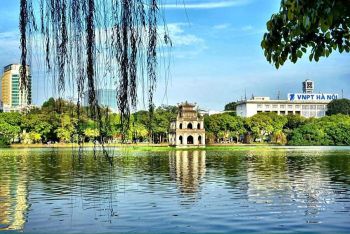
Hoan Kiem Lake : Located in the heart of Hanoi, Hoan Kiem Lake (Ho Guom) is famous for its peaceful scenery and historical legends.
Ho Chi Minh's Complex : Includes the Ho Chi Minh Mausoleum, Stilt House, Presidential Palace, and Ho Chi Minh Museum.
Temple of Literature : Built in the 11th century, the Temple of Literature is recognized as Vietnam's first national university.
Dong Xuan Market : The largest indoor market in Hanoi's Old Quarter, offering wholesale goods, souvenirs, clothing, and local food.
Tran Quoc Pagoda : The oldest pagoda in Hanoi, located on a tranquil islet in West Lake.
Museum of Ethnology : The Museum of Ethnology showcases the culture and heritage of Vietnam's 54 ethnic groups.
West Lake : The largest freshwater lake in central Hanoi (500 ha), surrounded by iconic temples and Truc Bach Lake. Read more about West Lake attractions.
Quang Ba Flower Market : A bustling night flower market operating from midnight until dawn near West Lake.
Morning Exercises : Discover local life early in the morning as locals gather to dance, practice tai chi, and exercise by Hoan Kiem Lake.
Duong Lam Village : Located 40 km west of Hanoi in Son Tay town, famous for ancient stone houses and traditional rural village architecture.
Eat & Drink


Pho : Vietnam's famous noodle soup served with chicken or beef.
Pho Bo (Noodle soup with beef):
- Pho Thin: 13 Lo Duc Str, Central Hanoi
- Pho 10 Ly Quoc Su: 10 Ly Quoc Su Str, Hanoi Old Quarter
- Pho Bat Dan: 50 Bat Dan Str, Hanoi Old Quarter
Cha Ca : Pan-fried fish fillets with dill and turmeric.
Cha Ca La Vong: 14 Cha Ca Str, Hanoi Old Quarter
Bun Cha : Grilled pork noodles served with fresh herbs.
- Bun Cha Hang Manh: 1 Hang Manh Str, Hanoi Old Quarter
- Bun Cha Huong Lien (Bun Cha Obama): 24 Le Van Huu Str, Central Hanoi
Explore more dining options in our Hanoi Restaurant Guide.
Hanoi Nighlife
Bars & Coffee
The Rooftop Bar : 19th Floor, Pacific Place, 83 Ly Thuong Kiet St.
Summit Lounge : Top Floor, Pan Pacific Hotel, 1A Thanh Nien St (Best West Lake sunset views).
City View Cafe : 5th Floor, 7 Dinh Tien Hoang St (Overlooking Hoan Kiem Lake).
Night Clubs
The Opera Night Club : 18 Luong Ngoc Quyen St, Hanoi Old Quarter
Hero Club : 42M Yen Phu St, Ba Dinh Ward
Check out our complete list of Night Clubs in Hanoi.
About this Hanoi guide: This guide is prepared by WaytoVietnam Travel, a Hanoi-based international tour operator, and is reviewed periodically to keep practical travel information useful for visitors.
Vietnam Travel Guides
Recommended Tours



Related articles
Recommended Tours