-
Vietnam tours
VietNam Tour Packages
- South East Asia Tours
- Cruises
- Request a quote







Halong Bay
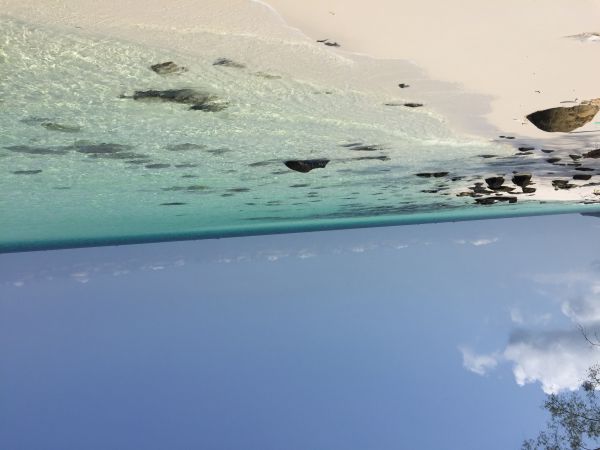
Halong Bay is one of Vietnam’s most iconic natural attractions, located in Quang Ninh Province, about 180 km (a 2.5-hour drive via the expressway) from Hanoi. Famous for its emerald waters, towering limestone islands, and forest-covered karsts, the bay has been recognized as a UNESCO World Heritage Site since 1994.
The best way to experience Halong Bay is on the water, whether on a day trip or an overnight cruise among its limestone islands and hidden caves. Cruises can also explore nearby Bai Tu Long Bay and the Cat Ba Archipelago, where quieter scenery, secluded beaches, and kayaking offer a more serene side of northern Vietnam.
Halong Bay at a Glance
- Best Time to Visit: October to April, when the weather is generally cooler and drier and the sea is often calmer. October to December is particularly good for cruising, while January to March brings cooler temperatures and atmospheric misty views.
- Ideal Duration: 2–3 Days. A 2-day, 1-night cruise is a good choice for first-time visitors who are short on time. A 3-day, 2-night itinerary allows a more relaxed pace and more time to explore nearby areas such as Lan Ha Bay or Cat Ba Island.
- Top Highlights: Overnight luxury cruises, Sung Sot Cave, Titov Island, kayaking at Luon Cave, and traditional floating villages.
- Must-Try Foods: Halong squid sausage (chả mực), fresh sea clams (ngán), oysters, horseshoe crab (sam), and sipunculid worm (sá sùng).
- Recommended For: First-time travelers, couples, families, photographers, and nature lovers seeking a relaxing cruise experience.
- Good to Know: In 2023, UNESCO extended the World Heritage property to include the Cat Ba Archipelago, creating the combined Ha Long Bay – Cat Ba Archipelago site.

Total Area: Approx. 1,553 km²
UNESCO World Heritage Property: 656.5 km² (Ha Long Bay – Cat Ba Archipelago, extended in 2023)
Islands & Islets: Over 1,600 limestone islands and islets
Karst Height: 50–100 meters above sea level
Location: Quang Ninh Province, Northern Vietnam
Geography
Halong Bay is located in northeastern Vietnam, in Quang Ninh Province, about 180 km from Hanoi—a journey of around 2.5 hours via the expressway. It lies close to the Chinese border, with Mong Cai City about 160 km to the northeast.
Covering approximately 1,553 km², Halong Bay stretches along the coast of Quang Ninh Province, bordered by Quang Yen, Halong City, Cam Pha, and Van Don. To the east and northeast lies Bai Tu Long Bay, while to the south and southeast, the bay connects with Lan Ha Bay and the Cat Ba Archipelago. In 2023, UNESCO expanded the World Heritage property to include the Cat Ba Archipelago, forming the combined Ha Long Bay – Cat Ba Archipelago World Heritage property, covering 656.5 km².
The seascape is characterized by nearly 2,000 limestone islands and islets rising dramatically from emerald waters, many topped with dense tropical vegetation. These distinctive karst formations have evolved through hundreds of millions of years of geological processes, creating one of Vietnam’s most breathtaking natural landscapes.
Weather & Climate
Halong Bay has a tropical coastal climate with two main seasons—a hot, humid summer and a cooler, drier winter—with relatively mild transitional periods in spring and autumn. The annual average temperature is around 25°C.
- Summer & Rainy Season (May to September): Temperatures generally range from 27°C to 35°C, with high humidity and frequent rainfall. Tropical storms and typhoons are more common from June to September and can occasionally affect cruise schedules and sea conditions. Despite the rain, sunny days and warm water can make this period suitable for swimming and kayaking when conditions are favorable.
- Dry & Cooler Season (October to April): Rainfall generally decreases, while temperatures become more comfortable for sightseeing and cruising. October to December often brings cooler weather and relatively calm seas. From January to March, temperatures can be cooler and the weather more overcast, with misty mornings sometimes creating atmospheric views of the limestone karsts.
Transportation
Halong Bay is well connected to Hanoi and other destinations in northern Vietnam, with several convenient transportation options depending on your itinerary.
By Air: There are three airports that can be used when visiting Halong Bay and the surrounding areas. Cat Bi International Airport in Hai Phong is about 50 km from Halong Bay and takes roughly 1–1.5 hours by car. It is also a convenient gateway for travelers heading to Cat Ba Island, with road and ferry connections available. Van Don International Airport is approximately 55 km from Halong Bay and takes around 1 hour by car, while Noi Bai International Airport in Hanoi is about 175 km away, with a typical driving time of around 2.5–3 hours.
By Bus, Shuttle, or Private Car: Traveling by road is the most common way to reach Halong Bay from Hanoi. Tourist shuttle buses, limousine vans, and private cars operate regularly, with the expressway reducing the journey to around 2.5 hours. Shuttle buses and limousine vans are convenient for independent travelers, while private cars offer greater flexibility and can pick you up directly from your hotel. Many cruise operators also arrange shared or private transfers from Hanoi to the cruise port.
By Train: A train service connects Hanoi with Halong City, but it is not generally the most convenient option for tourists. The journey takes considerably longer than traveling by road, and the schedule may not align well with cruise check-in times. For most visitors, a shuttle bus, limousine van, or private transfer is a more practical choice.
Future High-Speed Rail: A new Hanoi–Quang Ninh high-speed railway officially broke ground in April 2026. The approximately 120-km line will pass through Hanoi, Bac Ninh, Hai Phong, and Quang Ninh, with its final station in Ha Long. The project is scheduled to be completed and enter commercial operation in 2028, potentially making travel between Hanoi and Quang Ninh much faster.
Things to See & Do
Halong Bay offers a wide range of experiences, from scenic cruising and outdoor activities to cave exploration, beach time, and encounters with local coastal culture. Most activities are included in day-trip or overnight cruise itineraries, although the exact experiences vary by cruise route and weather conditions.
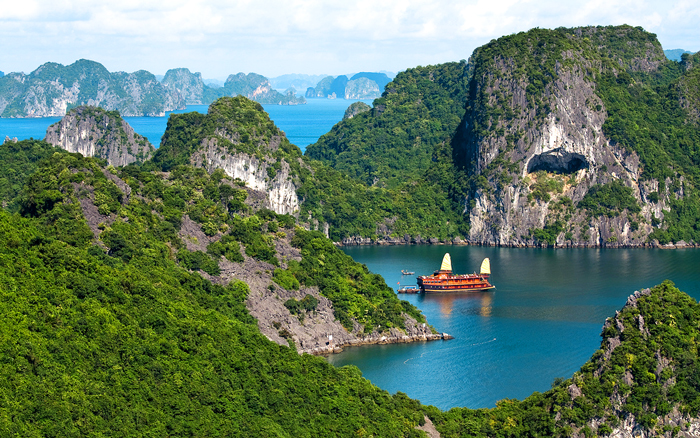

Overnight & Day Cruises
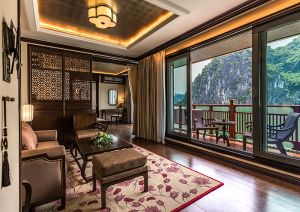
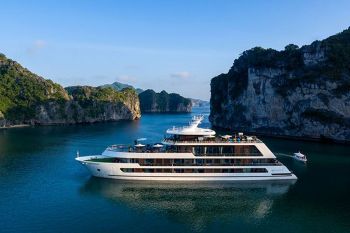
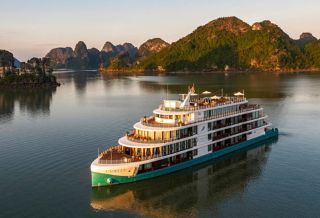
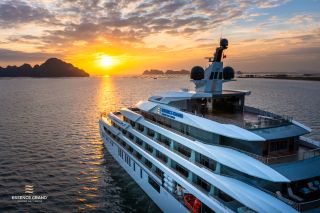
Cruising is the classic way to experience Halong Bay. Options range from day boats to modern luxury cruises with comfortable cabins, private balconies, restaurants, and spacious sundecks. Some itineraries also extend to the quieter waters of Lan Ha Bay or Bai Tu Long Bay.
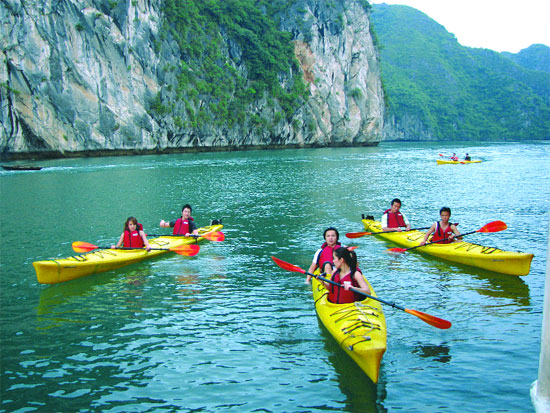
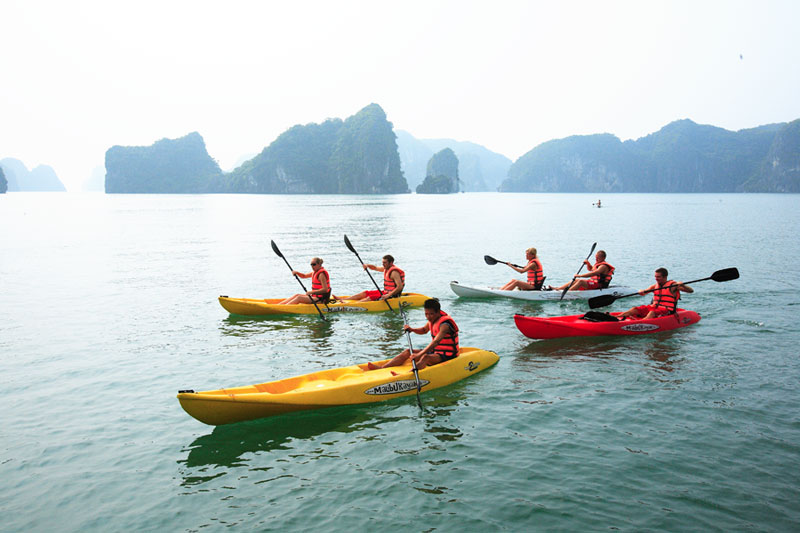
Kayaking & Bamboo Boat Rowing
Kayaking offers a closer look at the bay's limestone islands, hidden lagoons, and narrow waterways. Travelers who prefer a more relaxed experience can take a traditional bamboo boat rowed by a local guide. Popular spots include Luon Cave, where visitors pass beneath a low limestone arch into a sheltered lagoon, and Dark & Bright Cave in the Lan Ha Bay area.

Exploring Spectacular Caves
Halong Bay is home to numerous limestone caves formed through millions of years of geological processes. Sung Sot Cave (Surprise Cave), Thien Cung Cave (Heavenly Palace Cave), and Dau Go Cave are among the best-known caves visited on cruise itineraries, featuring impressive chambers, stalactites, and stalagmites.
Beach Relaxation & Island Hiking
Some cruises stop at Titov Island or other small beaches where visitors can swim and relax when sea conditions are suitable. Titov Island also has a short climb to a viewpoint overlooking the surrounding limestone islands, offering one of the most popular panoramic views of the bay.
Visiting Floating Fishing Villages
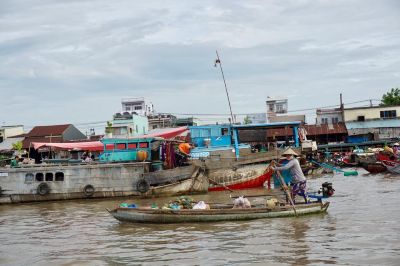
Traditional floating fishing communities were once an important part of life in Halong Bay. Selected cruise itineraries offer opportunities to learn about the area's fishing traditions, floating homes, and aquaculture. Cua Van and Vung Vieng are among the best-known former floating village areas associated with the bay.
Onboard Activities & Night Squid Fishing
Overnight cruises often include activities beyond sightseeing, such as Vietnamese cooking demonstrations, sunset drinks, morning Tai Chi, and night squid fishing. These activities vary by cruise and season, so it is worth checking what is included before booking.
Exploring Cat Ba Island & Lan Ha Bay
Travelers with more time can combine Halong Bay with Cat Ba Island and Lan Ha Bay. Cat Ba offers hiking in Cat Ba National Park, cycling to Viet Hai Village, exploring Hospital Cave, and relaxing on beaches around the island. Lan Ha Bay provides further opportunities for kayaking, swimming, and exploring a quieter limestone seascape.
Food & Drinks
Beyond its breathtaking karst landscapes, Quang Ninh Province is also known for its distinctive coastal cuisine, shaped by fresh seafood and local culinary traditions. Visiting Halong Bay is a good opportunity to try several specialties that are closely associated with the region, both at local restaurants and on board cruises.

Dining on Board: If you take a day trip or overnight cruise, you can enjoy fresh local seafood and Vietnamese dishes served on board. Many mid-range and luxury cruises offer set menus or buffets featuring seafood, Vietnamese specialties, and international dishes. Dining while surrounded by the bay's limestone islands and seascape is an enjoyable part of the Halong Bay experience.
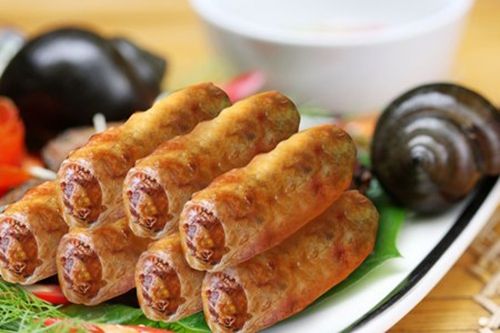
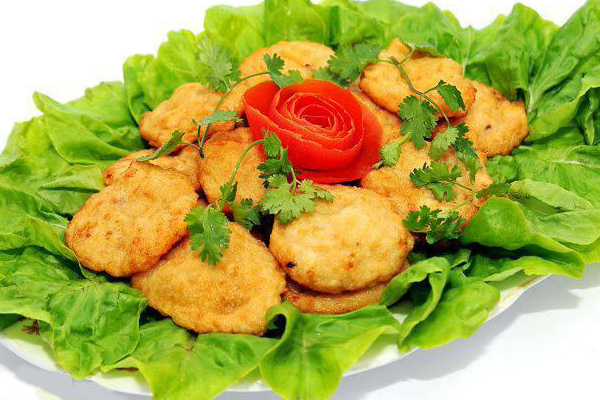
Cha Muc (Hand-Pounded Squid Patties): One of the signature dishes of Halong City, cha muc is made from fresh squid traditionally pounded by hand to achieve a firm, springy, and slightly crunchy texture. The patties are deep-fried until golden brown and are best enjoyed hot, dipped in fish sauce with black pepper or served with steamed rice rolls (banh cuon).
Fresh Seafood: Halong Bay is an excellent place to enjoy fresh oysters, clams, prawns, crabs, and local fish. You can find seafood at restaurants in Halong City or enjoy it on board a cruise, where chefs prepare seafood and Vietnamese dishes in a variety of styles.
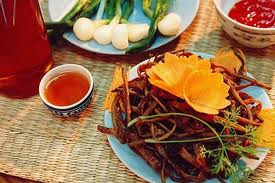
Sa Sung (Sipunculid Worm): A rare and prized seafood delicacy traditionally harvested in coastal areas of Quang Ninh, particularly around Quan Lan and Minh Chau. Fresh sa sung can be stir-fried with garlic or chili, while dried sa sung is often roasted or used to add a rich umami flavor to traditional broths. Because of its limited supply and labor-intensive harvesting, it is one of the region's more expensive local delicacies.
Ngan (Hard Clam): This large coastal clam is prized for its rich, slightly sweet flavor and can be prepared in several ways, including grilled, steamed, cooked into savory porridge, or stir-fried with noodles and vegetables. It is a popular seafood specialty in Quang Ninh and is worth trying at local restaurants.
Sam (Horseshoe Crab): A distinctive marine delicacy associated with Quang Yen and Halong City. Local cooks prepare horseshoe crab in a variety of ways, including salads, sweet-and-sour dishes, grilled cartilage, and other traditional preparations. Availability can vary depending on the season.
Banh Gat Gu (Nodding Cake): A traditional steamed rice roll from Tien Yen in Quang Ninh Province. Made from ground rice flour and cooked rice, the soft, chewy rolls are usually served with a savory dipping sauce. The name gat gu, meaning "nodding," comes from the way the long, soft rolls gently bend when picked up.
Halong Bay Cruises & Itineraries
Taking a Halong Bay cruise is the classic way to experience the region, taking you through its towering karst towers, hidden caves, and calm emerald waters. Choosing the right itinerary depends on your available time, budget, and travel style:
- Day Cruises (6–8 Hours): Ideal for travelers with limited time who want to experience the bay's highlights in a single day. Departing from Tuan Chau Harbor or Halong International Cruise Port, day trips typically include scenic cruising, a visit to a major cave like Sung Sot Cave, kayaking or bamboo boat rowing at Luon Cave, and a stop at Titov Island.
- 2-Day, 1-Night Cruises: The most popular choice for first-time visitors. This compact itinerary offers a relaxed introduction to the bay, allowing passengers to enjoy sunset and sunrise over the karst seascape, morning Tai Chi, evening squid fishing, and a well-paced program of excursions.
- 3-Day, 2-Night Cruises: Recommended for travelers seeking a deeper and more tranquil experience. On the second day, guests typically transfer to a smaller day-boat to explore secluded lagoons, pristine beaches, or remote fishing villages in Lan Ha Bay or Cat Ba Island before returning to the main ship.
- Luxury & Private Cruises: Options range from comfortable mid-range vessels to 5-star luxury ships with spacious cabins, private balconies, fine dining, sundeck pools, and spas. Chartering a private cruise is also available for families or small groups seeking maximum privacy and flexibility.
When booking a cruise, review the specific route, cabin type, included activities, meals, and transfer arrangements rather than relying solely on the star rating. Weather and sea conditions can also affect operations, so itineraries may be adjusted by local maritime authorities for safety.
Halong Bay vs. Lan Ha Bay vs. Bai Tu Long Bay
While all three bays share the same spectacular limestone karst landscape, each offers a different atmosphere, cruise experience, and way to explore the region.
| Feature | Halong Bay | Lan Ha Bay | Bai Tu Long Bay |
|---|---|---|---|
| Best For | First-time visitors & landmark lovers | Active travelers, couples & travelers seeking a quieter cruise | Peace seekers & nature lovers |
| Vibe & Atmosphere | Iconic, lively & popular | Scenic, relaxed & less crowded | Serene, peaceful & less developed |
| Crowd Level | Higher, especially in peak periods | Generally moderate | Generally lower |
| Key Highlights | Sung Sot Cave, Titov Island, Luon Cave | Cat Ba Island, Dark & Bright Cave, Ba Trai Dao Beaches | Thien Canh Son Cave, Vung Vieng area |
| Activities | Cave visits, viewpoint hikes, kayaking | Kayaking, swimming, cycling around Cat Ba | Kayaking, cave visits, quiet beach time |
| Cruise Options | Wide range of cruise options | Luxury and boutique cruises | Smaller and boutique-style cruises |
- Halong Bay: The classic choice for first-time visitors, with some of the region's best-known caves, islands, and cruise routes. It also offers the widest range of cruise options, from comfortable mid-range boats to luxury vessels.
- Lan Ha Bay: A quieter alternative around Cat Ba Island, with numerous small islands, beaches, and opportunities for kayaking and swimming. It is a good choice for travelers who want to combine a cruise with outdoor activities and time on Cat Ba.
- Bai Tu Long Bay: A peaceful option northeast of Halong Bay, with a less-developed seascape and generally fewer cruise boats. It suits travelers who prefer a quieter atmosphere and a more relaxed cruise experience.
Practical Travel Tips
- What to Pack: Bring lightweight clothing in warmer months and warm layers during the cooler season. Swimwear, sunscreen, sunglasses, insect repellent, and comfortable non-slip shoes are useful for kayaking, swimming, cave visits, and island viewpoints. A light waterproof jacket and a small waterproof bag can also come in handy.
- Stay Connected: Mobile coverage can become weaker as the cruise moves farther from the mainland and between the limestone islands. Quang Ninh is improving connectivity across Halong Bay, including the deployment of 10 Starlink satellite internet points at locations where mobile coverage is limited. Many modern luxury cruises are also equipped with satellite internet, making it easier to stay connected while cruising. However, connection quality can still vary by cruise and location, so it is a good idea to download important information before departure.
- Check What Is Included: Meals, drinks, kayaking, entrance fees, and Hanoi transfers vary between cruises. Check the inclusions carefully before booking, especially when comparing different cruise packages.
- Bring Some Cash: Major credit cards are generally accepted on board, but having some Vietnamese Dong (VND) is useful for small purchases on shore, personal expenses, or tips.
- Be Prepared for Weather Changes: Rain, strong winds, tropical storms, or heavy fog can affect cruise schedules and activities. Routes may be changed, or cruises may be delayed or canceled for safety, so avoid scheduling an important flight immediately after your cruise.
- Keep Valuables Secure: Take care with phones, cameras, and other valuables when kayaking, swimming, or visiting beaches. A waterproof phone pouch is useful for activities on the water.
Frequently Asked Questions
Vietnam Travel Guides
Recommended Tours